When the traditional sleep clinic experience let us down, we changed it.

Levels of Apnea
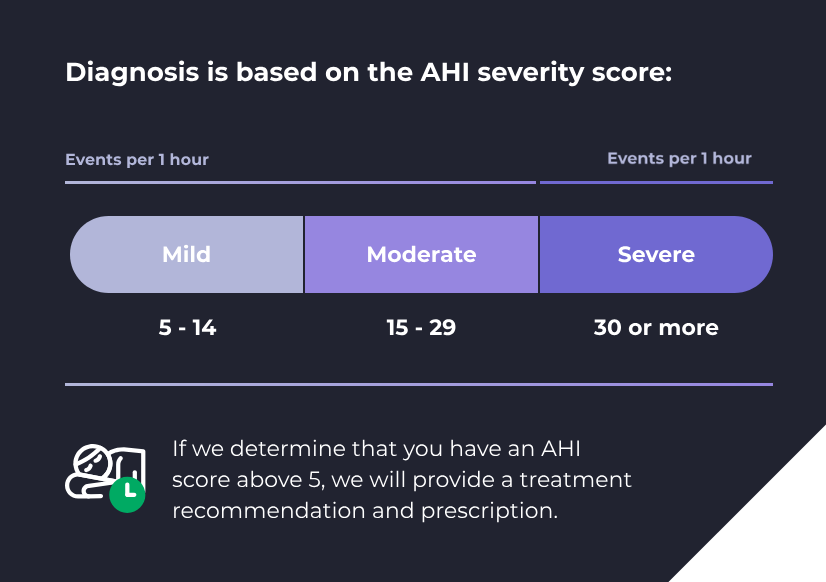
Let’s start with the Apnea-Hypopnea Index, or AHI for short. Your AHI score is a basic math equation: the number of times you stopped breathing (apnea) or nearly stopped breathing (hypopnea), divided by the number of hours you were asleep. The AHI score indicates the presence and severity of Obstructive Sleep Apnea (OSA).
- Normal or No Apnea: 0-5 events/hour
- Mild Sleep Apnea: 6-15 events/hour
- Moderate Sleep Apnea: 16-29 events/hour
- Severe Sleep Apnea: 30+ events/hour
Your AHI score will help your provider to guide you on which treatment options would be most beneficial, with the goal of lowering your AHI.
Understanding Sleep Stages
Your sleep cycle is broken down into different stages of sleep. REM (Rapid Eye Movement) sleep is characterized by rapid eye movements, faster pulse rate, and quicker breathing. OSA is often a more common occurrence during REM sleep. NREM (Non-REM), stage 3, is the stage of sleep that our bodies are able to rest and recover, NREM sleep stages are vital for physical and mental restoration.
- Stage 1: N1 Falling Asleep
- Stage 2: N2 Light Sleep
- Stage 3: N3 Deep Sleep
- Stage R: REM Sleep
Your sleep stages from the night of your study will be shown in a graph similar to the one below. The time is split into 30-minute increments over your total sleep time for the night. The RED lines show the total time spent within ‘REM’ sleep.



Common Sleep Study Terms
While your AHI score and sleep stages are important, there are other incredibly valuable pieces of information that are contained in your sleep report. This information will offer insights into your sleep architecture overall.
Pulse/heart rate:
Obstructive Sleep Apnea (OSA) is the collapse of the upper airway during sleep, which leads to pauses in breathing, drops in oxygen and cardiovascular stress. In addition to consistent disruptions in sleep, OSA is associated with:

Oxygen Saturation (Sa02):
Oxygen saturation refers to the oxygen levels in the blood. The length of time under 89% is the most important metric to your clinician. This may mean your body is not getting enough oxygen while you sleep. When an individual’s oxygen saturation levels are below 89% for more than 5 total minutes of the night, the patient will most likely be diagnosed with hypoxemia. The graph shown below is an example.

Intermittent hypoxemia:
Occurs when the oxygen levels drop below 89% for only a few seconds and then rebound back to normal quickly. Intermittent Hypoxemia is highly suggestive of OSA and typically resolves once the OSA is treated.
Sustained Hypoxemia:
Occurs when the oxygen drops for minutes at a time. Sustained Hypoxemia is suggestive of a condition such as hypoventilation, which does not typically resolve once the OSA is treated and may require additional care.
Sleep Efficiency:
The percentage of time a person sleeps in relation to the amount of time a person spends in bed. The percentage is calculated by dividing total sleep time by total time in bed.
Respiratory Disturbance Index (RDI):
The number of times you wake up by snoring. Evaluating this measure alone does not qualify whether you do or do not have sleep apnea.
Next Steps
If you have been diagnosed with Obstructive Sleep Apnea (OSA), your clinician will provide treatment recommendations based on your sleep test results. If you are in the GEM portal, navigate to the ‘Diagnosis’ tab to see your sleep study report. When you’re ready, click on the ‘Treatment’ tab to review your recommended treatment options.
If you have any questions, please reach out to our team. You can text us at (612) 808-8930 or email us at contact@mygemsleep.com