Obstructive sleep apnea (OSA) is a common but frequently unrecognized condition. An estimated 60-80 million Americans have obstructive sleep apnea, but only 15 million have been diagnosed. OSA happens when the upper airway (throat) collapsing at night when you are sleeping.
Signs of undiagnosed sleep apnea include:
- Loud snoring
- Pauses in breathing or gasping during sleep
- Waking up with headaches
- Dry mouth or sore throat
- Daytime fatigue and lack of focus
- Waking up exhausted even after a “full night” of sleep
The good news is that identifying and managing sleep apnea can be easy. CPAP therapy is the most common treatment for moderate to severe OSA. This blog helps you better understand how CPAP therapy works.
Key Takeaways:
- CPAP (continuous positive airway pressure) uses pressurized room air to keep your airway open during sleep.
- CPAP is a common first-line treatment for moderate to severe obstructive sleep apnea.
- The “best” CPAP mask depends on face shape, sleeping position, and whether you breathe through your mouth.
- Most new users adapt within days to a few weeks with the right fit and coaching.
CPAP Therapy for Obstructive Sleep Apnea (OSA)
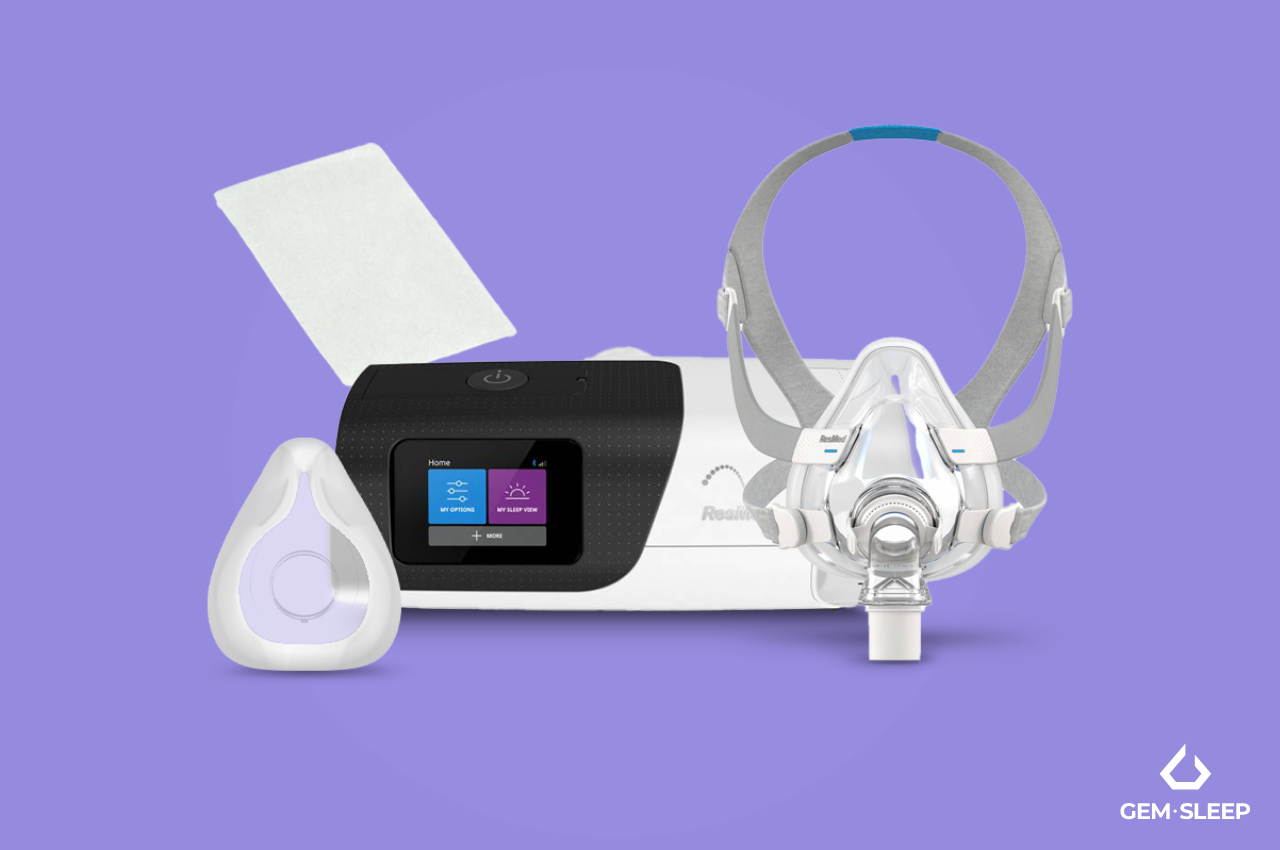
CPAP stands for Continuous Positive Airway Pressure. It is a mask that goes over the nose, uses compressed room air (not oxygen) up through your nose to support the throat and keep it open. It’s job is to keep the airway open during sleep.
Many people are reluctant to try CPAP because it is a mask that goes over the nose and that can take a little while to get used to. However, the good news is that the majority of people are able to make CPAP work within a couple of weeks with the right support.
CPAP Mask Types: Nasal, Nasal Pillow, Cradle, and Full-Face
CPAP masks are not one-size-fits-all. Depending on your face and nose shape, whether or not you have facial hair, and what your style and comfort preferences are, you will need to choose the right mask style option for you.
Your mask choice can affect comfort and therapy success. The GEM SLEEP process includes a virtual mask fitting to help you decide the best CPAP for your face type, sleeping position, and style preference.
Why CPAP Therapy Matters for Treating Sleep Apnea
Untreated OSA puts your body into a constant state of alertness each time your airway collapses during sleep. Instead of deep restorative sleep, your system jolts awake with bursts of adrenaline and cortisol.
With repeated sleep disruptions, your oxygen levels drop and your blood becomes more prone to blood clots. Your heart has to work harder as your blood pressure goes up and your brain misses the deep restorative sleep it needs to clear itself out and help you feel mentally sharp.
Long-term, untreated obstructive sleep apnea can:
- Increase cardiovascular disease, including heart attacks, vascular disease, and strokes.
- Worsen mental health issues such as anxiety, panic attacks, and depression.
- Create relationship tensions because it isn’t just your sleep that is disrupted, your partner’s sleep is disrupted too.
In summary, the repeated disruptions caused by sleep apnea cause you to wake up exhausted and have long-term serious health consequences. By treating OSA with CPAP Therapy, you can significantly improve your sleep quality and overall well-being.
Benefits of Using CPAP Therapy
People are often greatly surprised, at how much better they feel once we help them get used to and comfortable with using a CPAP mask. You can see benefits from CPAP as soon as the first night, but more often people will notice benefits after a week or two.
Common benefits include:
- Improved daytime energy
- Reduced brain fogginess
- Better mood
- Better cardiovascular health
GEM SLEEP helps you get a good night’s rest, take care of your sleep apnea, and improve your long-term health and well-being.
Common CPAP Challenges (and how to fix them): Leaks, Dryness, Claustrophobia
Getting Comfortable with the CPAP Mask
Starting out as a new CPAP user can take a little trial and error. Some of the most important things you can do to make the transition a smooth one include:
| No Pressure | Don’t put too much pressure on yourself. Using a CPAP takes a few days to weeks to become a habit and feel natural should take the pressure off. Don’t assume it will work perfectly the first night. |
| Low Stakes Practice | Put your CPAP device on during the day as practice to help desensitize yourself to wearing it at night. Wear your mask for just 20 minutes during the day while you do other activities, like watching a show or listening to a podcast. |
| Work Up to It | The goal is to wear the CPAP mask during your whole night’s sleep, but in your first few tries, if you need to take it off part way through the night, that’s ok. Every bit of time sleeping with your device on benefits your body and that’s a win! |
| Do What Feels Right | Everyone has a different preferred sleeping position like back, side or stomach. You shouldn’t have to change your sleeping preference because of a CPAP. Try to start your sleep in the position that feels most natural. |
| Humidity Mastery | If you’re waking up with a very dry throat or sinuses, it can be a sign that the air coming from your CPAP is too dry. The good news – you can adjust your machine’s humidity settings. Check your device’s instructions (and consult with your coach) for how to adjust the humidity to a level that is comfortable for you. |
| Watch the Liquids | Be careful about what you put in your body before bedtime. Alcohol and caffeinated drinks like coffee and soda make it hard to fall asleep. Avoid both in the hours leading up to your sleep routine. |
| Ensure Your Body is Ready | Wait until you are sleepy before getting into bed. This is especially true during your first few nights with the CPAP machine. Mask up once you are tired. |
Ensuring Consistent Use
It is important that you use your CPAP every night. When frustration sets in, remember that you are not alone with GEM Support. Our Starting CPAP Therapy with Comfort and Confidence blog offers additional tips to ensure you are successful.
GEM SLEEP’s Role in Treating Sleep Apnea
GEM SLEEP provides an end-to-end solution for diagnosing, treating, and staying compliant with sleep apnea treatments.
Our team offers the support you need to be successful, including:
- Regular coaching and clinician check‑ins
- Help with adjustments when something doesn’t feel right
- Access to CPAP equipment and recurring supplies at home
Remember, GEM SLEEP coaches help you trouble shoot pressure settings, leakage, strap adjustment, and other discomfort issues. They can also re-evaluate your chosen CPAP mask type to ensure your choice meets all your needs.
CPAP FAQs: Comfort, Oxygen, Results Timelines, and Diagnosis
It is a mask that goes over the nose, uses compressed room air (not oxygen) through your nose to keep the back of the throat open. Its job is to keep the airway open during sleep.
Initially, wearing a CPAP may feel different, however most users adapt to CPAP and feel great within a couple of weeks.
No. It uses compressed room air, not additional oxygen.
Some people notice benefits the first night. Most notice improvements in the first 1-2 weeks of using a CPAP.
Only a medically approved sleep test can diagnose sleep apnea. GEM SLEEP is a virtual clinic transforming how people access care for sleep apnea, making it possible to get properly diagnosed and treated entirely at home. It provides a complete continuum of care with board-certified, licensed clinicians and coaches.
CPAP for Sleep Apnea: The Bottom Line
CPAP is highly effective for treating OSA and GEM Sleep can help you succeed with OSA therapy. The first step is to diagnose sleep apnea, understand if CPAP is the right therapy solution, then work with licensed providers to find the right treatment for you and to follow up with the GEM Support team.
Get started with GEM SLEEP.
Disclaimer: If you are tired or exhausted do not operate a vehicle or machinery. The information contained in this document is for educational purposes only, sleep apnea can only be diagnosed via a medically approved sleep test. A sleep test must be ordered and reviewed by a professional provider trained in sleep medicine.